

Sedimentation tank
Wuxi Wanchuan Environmental Equipment Technology Co., Ltd is a professional environmental company dedicating in research, development, production and sales of environmental equipments. The company has many professional technical personnels, modern plant, excellent mechanical and operating equipments, advanced testing methods, which are able to ensure the quality of worthy of the name. If you are interested, please contact us: Email: ds5898@163.com
Why Choose Us?
Professional Team
Company has accumulated many professional integrity and pragmatic innovation teams, such as, many technical staff experiencing in practice and many manufacturers with fine craftsmanship, as well as the model of scientific management and cooperation, and these provide the quality of products with powerful guarantee.
Professional Expertise
We are committed to developing and providing equipment that helps protect the environment. Our products are designed to reduce pollution, conserve resources, and contribute to a sustainable future.
Professional Service
From research and development to after - sales support, we offer a full range of services. We assist customers in choosing the most suitable equipment, provide installation and maintenance services, and are always ready to address any concerns.
-
 Sedimentation Dissolved Air FlotationThe Lammera sedimentation system is based on the Shallow Pool Theory proposed by Professor Hazen in Germany in the early 20th century. The core is to propose that the sedimentation capacity isAdd to Inquiry
-
 Lammela Sedimentation TankSmall area: lengthen the inclined plate to improve the separation efficiency of the settler and save 1.5 to 2 times the area.Uniform water distribution: through equal resistance water distributionAdd to Inquiry


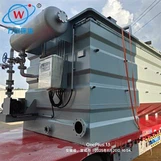
Introduction to Sedimentation tank
A sedimentation tank is a storage tank in which wastewater is filled and stored overtime to remove the suspended particles present in the water. These particles fall to the bottom of the tank because of gravity and the use of flocculants which have been added to the wastewater in primary treatment.
Specifications of Sedimentation tank
|
Modle |
Processing Capacity |
Power Meter |
(m)Dimension |
DN(Nozzle list) |
|||||
|
KW |
|||||||||
|
m³/h |
Sludge Thickener |
L |
W |
H/H1 |
Water Inlet |
Water Outlet |
Mud Outlet |
Backw |
|
|
(A) |
(B) |
Sludge outlet |
(D) |
||||||
|
(C) |
|||||||||
|
WST-2 |
~2 |
0.25 |
2 |
1.1 |
2.7/1.9 |
50 |
50 |
50 |
40 |
|
WST-5 |
~5 |
0.25 |
2.6 |
1.6 |
3.4/2.5 |
80 |
50 |
50 |
50 |
|
WST-10 |
~10 |
0.25 |
3.4 |
1.8 |
3.8/3.0 |
100 |
80 |
50 |
50 |
|
WST-20 |
~20 |
0.25 |
3.4 |
2.2 |
3.8/3.0 |
150 |
150 |
50 |
50 |
|
WST-30 |
~30 |
0.25 |
4.2 |
2.2 |
3.8/3.0 |
150 |
150 |
50 |
50 |
|
WST-40 |
~40 |
0.25 |
4.0 |
2.8 |
3.8/3.0 |
200 |
200 |
50 |
50 |
|
WST-50 |
~50 |
0.25 |
4.7 |
2.8 |
3.8/3.0 |
200 |
200 |
50 |
50 |
|
WST-60 |
~60 |
0.25 |
4.8 |
3.0 |
3.8/3.0 |
250 |
200 |
50 |
50 |
|
WST-70 |
~70 |
0.25 |
5.1 |
3.2 |
3.8/3.0 |
250 |
200 |
50 |
50 |
|
WST-80 |
~80 |
0.25 |
5.1 |
3.4 |
4.0/3.2 |
250 |
250 |
80 |
50 |
|
WST-90 |
~90 |
0.25 |
6.3 |
3.0 |
4.0/3.2 |
250 |
250 |
80 |
50 |
|
WST-100 |
~100 |
0.25 |
7.1 |
3.0 |
4.0/3.2 |
250 |
250 |
80 |
50 |
|
WST-110 |
~110 |
0.25 |
7.8 |
3.0 |
4.0/3.2 |
300 |
250 |
80 |
50 |
|
WST-120 |
~120 |
0.25 |
8.3 |
3.0 |
4.0/3.2 |
300 |
300 |
80 |
50 |
Functions of Sedimentation tank


Space-saving Design: The inclined plates in a Lamella Clarifier increase the effective settling area while reducing the footprint of the tank. This space- saving design is especially useful for food processing sites that have limited space for wastewater treatment.
Efficient Separation: The inclined plates in a Lamella Clarifier increase the effective setting area, allowing more solids to settle in a shorter amount of time. This increased efficiency results in better separation of solids from liquid.
Low Maintenance: Lamella Clarifiers require minimal maintenance compared to traditional sedimentation tanks. The inclined plates are self-cleaning, reducing the need for regular cleaning and maintenance.
Cost-effective: L amella Clarifiers are generally less expensive than traditional sedimentation tanks, making them an attractive option for food processing sites with a tight budget.
Environmental Benefits: The efficient separation of solids from liquid in a Lamella Clarifier results in a cleaner effluent, which can reduce the environmental impact of wastewater discharge.
Application Scope of Sedimentation tank
Industrial Production Water: Sedimentation tanks in industrial production water treatment are used to remove suspended solids and impurities, ensuring the quality of water for various industrial processes.
Pulp & Paper Mill: In pulp and paper mills, sedimentation tanks play a crucial role in separating solids from wastewater, helping to recycle water and reduce environmental impact.
Iron And Steel Industry, Phosphorus Removal: For the iron and steel industry's phosphorus removal, sedimentation tanks are employed to separate the precipitated phosphorus compounds from the wastewater.
Metal Hydroxide Sewage: Sedimentation tanks are utilized to settle out metal hydroxide particles in metal hydroxide sewage, facilitating its proper treatment and disposal.
Municipal Sewage: In municipal sewage treatment, sedimentation tanks are fundamental for the primary separation of solid waste from the wastewater, preparing it for further treatment processes.
Dyeing Wastewater: For dyeing wastewater, sedimentation tanks are used to remove suspended dyes and other solid impurities, making the water more suitable for subsequent treatment steps.
Electroplating Wastewater: In electroplating wastewater treatment, sedimentation tanks help in separating heavy metal particles and other solid contaminants from the liquid for proper disposal or recycling.
Removal Of Impurities In Tanning Wastewater: Sedimentation tanks are applied to remove various impurities in tanning wastewater, improving the quality of the treated water and reducing pollution.
Payment Terms
We commonly accept T/T, L/C, and Western Union.
Payment<=USD 5000, 100% in advance.
Payment>=USD 5000, 30% T/T in advance, balance before shipment.
Certificate

FAQ
We're professional sedimentation tank manufacturers and suppliers in China, specialized in providing the best OEM service. We warmly welcome you to buy custom made sedimentation tank at competitive price from our factory.
primary settling tank, water sedimentation tank, sedimentation tank price