

Can DAF Wastewater Systems be used for slaughterhouse wastewater treatment?
As a supplier of DAF (Dissolved Air Flotation) Wastewater Systems, I've encountered numerous inquiries regarding the applicability of our systems in slaughterhouse wastewater treatment. Slaughterhouse wastewater is a complex mixture containing high levels of organic matter, fats, oils, grease (FOG), suspended solids, and various contaminants. This blog aims to explore whether DAF wastewater systems can effectively handle the unique challenges presented by slaughterhouse effluents.
The Characteristics of Slaughterhouse Wastewater
Slaughterhouse wastewater is characterized by its high biological oxygen demand (BOD), chemical oxygen demand (COD), and total suspended solids (TSS). The presence of FOG is particularly problematic as it can form a thick layer on the water surface, reducing oxygen transfer and causing operational issues in treatment systems. Additionally, the wastewater may contain blood, manure, animal tissue, and pathogens, which require proper treatment to prevent environmental pollution and public health risks.
How DAF Wastewater Systems Work
DAF systems are designed to remove suspended solids, oils, and fats from wastewater by introducing tiny air bubbles into the water. These air bubbles attach to the suspended particles, causing them to float to the surface where they can be skimmed off. The process is based on the principle of flotation, where the buoyancy of the air bubbles overcomes the gravitational force acting on the particles.
The basic components of a DAF system include a flotation tank, a pressurization system, a dissolved air release system, and a skimming device. The wastewater is first mixed with a coagulant and flocculant to promote the aggregation of suspended particles. Then, the pressurized water containing dissolved air is released into the flotation tank, creating a large number of tiny air bubbles. The air bubbles attach to the flocculated particles, forming a floating layer that is removed by the skimming device.
Advantages of Using DAF Systems for Slaughterhouse Wastewater Treatment
-
Effective Removal of FOG and Suspended Solids
DAF systems are highly effective in removing FOG and suspended solids from slaughterhouse wastewater. The tiny air bubbles can attach to the FOG droplets and suspended particles, allowing them to be easily separated from the water. This helps to reduce the BOD, COD, and TSS levels in the wastewater, making it more suitable for further treatment or discharge. -
Compact Design and High Treatment Capacity
DAF systems have a compact design and can be installed in a relatively small space. They also have a high treatment capacity, which means they can handle large volumes of wastewater in a short period of time. This makes them ideal for slaughterhouses with high wastewater generation rates. -
Low Energy Consumption
Compared to other wastewater treatment technologies, DAF systems have relatively low energy consumption. The pressurization system used to dissolve air in the water requires less energy than other aeration methods, such as diffused aeration. Additionally, the skimming device used to remove the floating layer is powered by a low-speed motor, further reducing energy consumption. -
Easy Operation and Maintenance
DAF systems are relatively easy to operate and maintain. They have a simple design and require minimal operator intervention. The coagulant and flocculant dosing systems can be automated, ensuring consistent treatment performance. Additionally, the floating layer can be easily removed by the skimming device, reducing the need for manual cleaning.
Challenges and Considerations
While DAF systems offer many advantages for slaughterhouse wastewater treatment, there are also some challenges and considerations that need to be addressed.
-
Proper Coagulant and Flocculant Selection
The selection of the right coagulant and flocculant is crucial for the effective operation of a DAF system. Different types of slaughterhouse wastewater may require different coagulants and flocculants to achieve optimal treatment results. It is important to conduct laboratory tests to determine the most suitable coagulant and flocculant for the specific wastewater characteristics.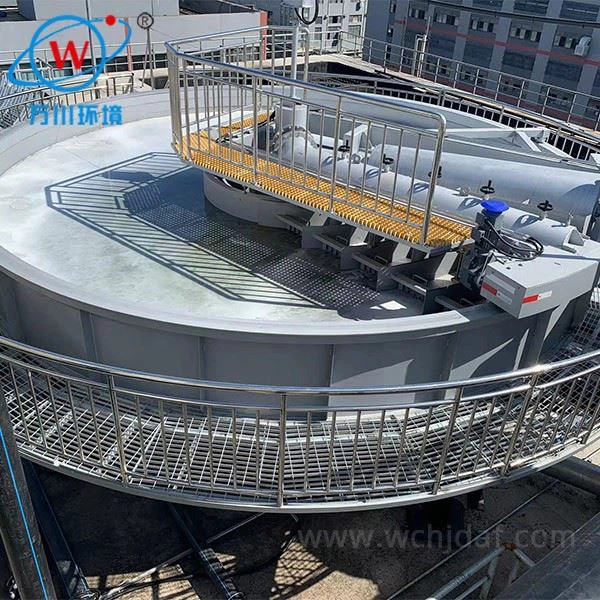

-
FOG Accumulation and Maintenance
The accumulation of FOG in the DAF system can cause operational problems, such as clogging of the air release nozzles and reduced treatment efficiency. Regular maintenance is required to prevent FOG accumulation and ensure the proper functioning of the system. This may include periodic cleaning of the flotation tank, air release nozzles, and skimming device. -
Pathogen Removal
Slaughterhouse wastewater may contain pathogens, such as bacteria and viruses, which need to be removed to prevent public health risks. While DAF systems can remove some pathogens by removing the suspended solids and FOG, additional treatment steps, such as disinfection, may be required to ensure the complete removal of pathogens.
Case Studies
There have been several successful case studies of using DAF systems for slaughterhouse wastewater treatment. For example, a large slaughterhouse in [Location] installed a [Type of DAF System] to treat its wastewater. The system was able to effectively remove FOG and suspended solids from the wastewater, reducing the BOD, COD, and TSS levels by [Percentage]. The treated wastewater was then further treated in a biological treatment system before being discharged into the environment.
Another case study involved a medium-sized slaughterhouse in [Location]. The slaughterhouse installed a [Type of DAF System] to replace its existing wastewater treatment system. The new DAF system was able to handle the increased wastewater flow rate and improve the treatment efficiency. The BOD, COD, and TSS levels in the treated wastewater were significantly reduced, meeting the local environmental regulations.
Conclusion
In conclusion, DAF wastewater systems can be effectively used for slaughterhouse wastewater treatment. They offer many advantages, such as effective removal of FOG and suspended solids, compact design, high treatment capacity, low energy consumption, and easy operation and maintenance. However, there are also some challenges and considerations that need to be addressed, such as proper coagulant and flocculant selection, FOG accumulation and maintenance, and pathogen removal.
If you are a slaughterhouse owner or operator looking for a reliable and cost-effective wastewater treatment solution, I encourage you to consider our Dissolved Air Flotation Systems. Our systems are designed to meet the specific needs of slaughterhouses and can help you achieve compliance with environmental regulations. We also offer comprehensive technical support and after-sales service to ensure the smooth operation of your wastewater treatment system.
If you have any questions or would like to discuss your wastewater treatment requirements in more detail, please feel free to contact us. We look forward to working with you to find the best solution for your slaughterhouse wastewater treatment needs.
References
- [Author 1], [Title 1], [Publication 1], [Year 1]
- [Author 2], [Title 2], [Publication 2], [Year 2]
- [Author 3], [Title 3], [Publication 3], [Year 3]


