

Evaluating the effectiveness of an air flotation system is a crucial task for both operators and suppliers. As a supplier of Air Flotation Systems, I understand the importance of providing accurate information on how to assess these systems' performance. In this blog post, I will discuss various methods and parameters that can be used to evaluate the effectiveness of an air flotation system.
Understanding Air Flotation Systems
Before delving into the evaluation methods, it is essential to have a basic understanding of how air flotation systems work. Air flotation is a process used to separate suspended solids, oils, and other contaminants from a liquid stream. It operates on the principle of attaching air bubbles to the particles, causing them to float to the surface where they can be removed.
There are different types of air flotation systems, such as dissolved air flotation (DAF), induced air flotation (IAF), and electro - flotation. Each type has its own advantages and is suitable for different applications. For example, Dissolved Air Flotation is widely used in wastewater treatment due to its high efficiency in removing fine particles and oils.
Key Performance Indicators (KPIs) for Evaluation
1. Removal Efficiency
The primary goal of an air flotation system is to remove contaminants from the liquid stream. Removal efficiency is calculated as the percentage reduction of a specific contaminant (e.g., suspended solids, oils) between the influent and the effluent of the system.
[ \text{Removal Efficiency}(%)=\frac{C_{in}-C_{out}}{C_{in}}\times100% ]
where (C_{in}) is the concentration of the contaminant in the influent, and (C_{out}) is the concentration in the effluent.
High removal efficiency indicates that the system is effectively separating the contaminants from the liquid. For example, in a Sewage Treatment Air Flotation system, a removal efficiency of over 90% for suspended solids is often considered a sign of good performance.
2. Turbidity
Turbidity is a measure of the cloudiness or haziness of a fluid caused by large numbers of individual particles that are generally invisible to the naked eye. A reduction in turbidity after passing through the air flotation system indicates the removal of suspended particles.
Turbidity is typically measured in nephelometric turbidity units (NTU). A well - functioning air flotation system should be able to significantly reduce the turbidity of the influent. For instance, if the influent turbidity is 500 NTU and the effluent turbidity is reduced to 50 NTU, it shows that the system is effectively removing the particles that cause turbidity.
3. Oil and Grease Removal
In applications involving the treatment of oily wastewater, such as in the petroleum industry, the removal of oil and grease is a critical performance indicator. Gas Flotation Of Petroleum Produced Water is an important process for separating oil from produced water.
The amount of oil and grease in the influent and effluent can be determined through laboratory analysis. A high - performing air flotation system should be able to achieve a low concentration of oil and grease in the effluent, often below regulatory limits.
4. Sludge Production
The amount of sludge produced by the air flotation system is also an important factor to consider. Excessive sludge production can increase the cost of sludge handling and disposal. A well - designed air flotation system should be able to concentrate the removed contaminants into a relatively small volume of sludge.
The sludge volume index (SVI) can be used to assess the settleability and compactness of the sludge. A lower SVI indicates better sludge characteristics, which means less volume of sludge to handle and dispose of.
Operational Parameters Affecting Effectiveness
1. Air - to - Solid Ratio
The air - to - solid ratio is the amount of air introduced into the system relative to the amount of suspended solids. A proper air - to - solid ratio is crucial for effective flotation. If the ratio is too low, there may not be enough air bubbles to attach to the particles, resulting in poor flotation. On the other hand, if the ratio is too high, it can cause excessive turbulence and break up the flocs, reducing the separation efficiency.
2. Retention Time
Retention time is the amount of time the liquid spends in the air flotation tank. Sufficient retention time is necessary for the air bubbles to attach to the particles and for the flocs to float to the surface. If the retention time is too short, the separation process may not be complete, leading to lower removal efficiency.
3. Chemical Dosage
In many air flotation systems, chemicals such as coagulants and flocculants are added to enhance the flocculation process. The correct dosage of these chemicals is essential for optimal performance. Over - dosing can lead to increased sludge production and higher operating costs, while under - dosing may result in poor floc formation and reduced removal efficiency.
Monitoring and Testing
Regular monitoring and testing are essential for evaluating the effectiveness of an air flotation system. This includes taking samples of the influent and effluent at regular intervals and analyzing them for parameters such as suspended solids, turbidity, oil and grease, and pH.
Online monitoring devices can also be installed to continuously measure key parameters such as turbidity and flow rate. This allows for real - time monitoring of the system's performance and enables operators to make timely adjustments if necessary.
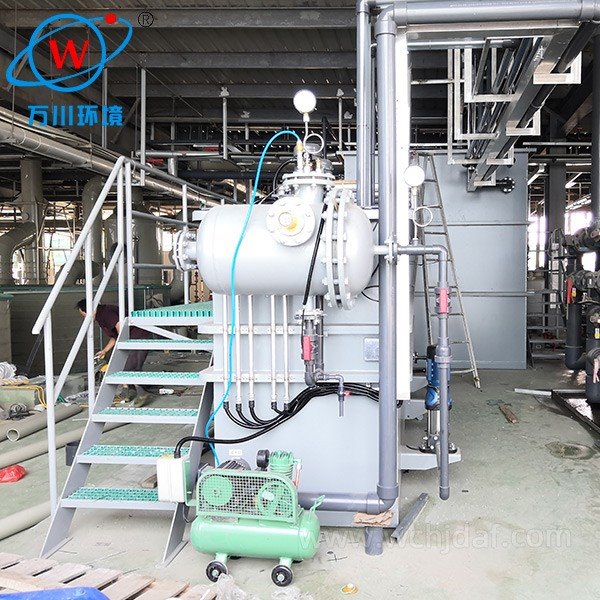

Case Studies
Let's take a look at a real - world example of evaluating an air flotation system. A wastewater treatment plant was using a dissolved air flotation system to treat industrial wastewater. The initial influent had a high concentration of suspended solids (about 800 mg/L) and a turbidity of 600 NTU.
After implementing a comprehensive evaluation program, the operators found that the removal efficiency of suspended solids was only around 70%. By adjusting the air - to - solid ratio, increasing the retention time slightly, and optimizing the chemical dosage, they were able to improve the removal efficiency to over 90%. The turbidity of the effluent was also reduced to below 50 NTU, indicating a significant improvement in the system's performance.
Conclusion
Evaluating the effectiveness of an air flotation system is a multi - faceted process that involves considering various performance indicators and operational parameters. By regularly monitoring and testing the system, and making necessary adjustments, operators can ensure that the air flotation system operates at its optimal level.
If you are in need of an air flotation system or want to improve the performance of your existing system, we are here to help. Our team of experts can provide you with customized solutions and technical support to meet your specific requirements. Contact us to discuss your needs and start a procurement negotiation today.
References
- Metcalf & Eddy. (2003). Wastewater Engineering: Treatment and Reuse. McGraw - Hill.
- Tchobanoglous, G., Burton, F. L., & Stensel, H. D. (2003). Wastewater Engineering: Treatment, Disposal, and Reuse. Pearson Education.


