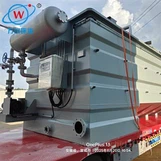
Air flotation is a crucial process in water treatment and various industrial applications, used to separate suspended solids, oils, and other contaminants from liquids. As an air flotation system supplier, I've had the privilege of working with a wide range of clients and understanding the diverse needs of different industries. In this blog, I'll explore the different types of air flotation systems available in the market and their unique features.
Suspended Air Flotation
Suspended Air Flotation (SAF) is a well - known and widely used air flotation technology. Suspended Air Flotation systems operate by introducing fine air bubbles into the water stream, which attach to the suspended particles. These particles then become buoyant and rise to the surface, forming a floating layer that can be easily removed.
One of the key advantages of SAF is its ability to handle high - volume flows. It is particularly suitable for industries that generate large amounts of wastewater, such as food and beverage, pulp and paper, and chemical manufacturing. The system can quickly and efficiently separate solids from liquids, reducing the load on downstream treatment processes.
SAF systems are also known for their relatively simple design and easy operation. They typically consist of a flotation tank, an air injection system, and a skimming device. The air injection system creates a large number of small bubbles, which have a high surface area - to - volume ratio, making them very effective at attaching to the suspended particles. The skimming device then removes the floating layer of solids from the surface of the tank.
However, SAF does have some limitations. For example, it may not be as effective in removing very fine particles or particles with a low density. In such cases, additional treatment steps may be required to achieve the desired level of water quality.
Dissolved Air Flotation in Water Treatment
Dissolved Air Flotation (DAF) is another popular type of air flotation system, especially in water treatment applications. Dissolved Air Flotation in Water Treatment works on the principle of dissolving air in water under pressure and then releasing the pressure suddenly. When the pressure is released, the dissolved air forms tiny bubbles, which attach to the suspended particles and carry them to the surface.
DAF systems are highly efficient in removing a wide range of contaminants, including oils, greases, suspended solids, and some types of algae. They are commonly used in municipal water treatment plants, industrial wastewater treatment facilities, and in the treatment of groundwater and surface water for potable use.
One of the main advantages of DAF is its ability to achieve a high degree of separation in a relatively short time. The small size of the bubbles produced in DAF systems allows them to attach to even the smallest particles, providing a very effective separation process. Additionally, DAF systems can be easily integrated with other treatment processes, such as coagulation and flocculation, to enhance the overall treatment efficiency.
However, DAF systems require a more complex setup compared to SAF systems. They need a pressure vessel to dissolve the air in water, a pressure control system to maintain the proper pressure, and a release mechanism to create the bubbles. This complexity can result in higher capital and operating costs.
Flocculation Integrated Flotation Treatment
Flocculation Integrated Flotation Treatment (FIFT) combines the principles of flocculation and air flotation to provide an enhanced treatment process. Flocculation Integrated Flotation Treatment involves the addition of flocculants to the water to agglomerate the suspended particles into larger flocs. These flocs are then more easily removed by the air flotation process.
FIFT is particularly useful when dealing with wastewater that contains a high concentration of fine particles or colloidal substances. The flocculation step helps to increase the size and density of the particles, making them more likely to attach to the air bubbles and rise to the surface.
This type of system is often used in industries such as mining, where the wastewater may contain a large amount of fine minerals and other suspended solids. It can also be applied in the treatment of industrial effluents from the textile, leather, and metal - finishing industries.


The advantage of FIFT is its enhanced treatment efficiency. By combining flocculation and air flotation, it can achieve a higher removal rate of contaminants compared to using either process alone. However, the addition of flocculants can increase the operating costs, and proper dosing and mixing of the flocculants are crucial for the success of the process.
Other Types of Air Flotation Systems
In addition to the above - mentioned systems, there are also some specialized air flotation systems available. For example, electro - flotation systems use an electric current to generate oxygen and hydrogen bubbles. These bubbles attach to the suspended particles and cause them to float to the surface. Electro - flotation is often used in the treatment of wastewater containing heavy metals or other electrically charged particles.
Micro - bubble flotation systems produce extremely small bubbles, typically in the range of a few micrometers in diameter. These micro - bubbles have a high surface area - to - volume ratio, which makes them very effective at attaching to fine particles. Micro - bubble flotation is used in applications where high - precision separation is required, such as in the semiconductor industry or in the treatment of ultra - pure water.
Choosing the Right Air Flotation System
Selecting the appropriate air flotation system depends on several factors. The nature and characteristics of the wastewater or water to be treated are of primary importance. This includes the type and concentration of contaminants, the particle size distribution, and the flow rate.
The required level of treatment also plays a crucial role. If a high degree of removal of fine particles or specific contaminants is needed, a more advanced system such as DAF or FIFT may be required. On the other hand, if the goal is to handle large - volume flows with relatively coarse particles, SAF may be a more suitable option.
Cost is another significant factor. Capital costs, operating costs, and maintenance costs all need to be considered. Some systems may have a higher initial investment but lower long - term operating costs, while others may be less expensive to purchase but require more costly maintenance and chemical inputs.
As an air flotation system supplier, I understand that each client has unique needs. We offer a comprehensive range of air flotation systems and can provide customized solutions based on your specific requirements. Whether you are dealing with industrial wastewater, municipal water treatment, or any other application, we have the expertise and technology to help you achieve your treatment goals.
If you are interested in learning more about our air flotation systems or would like to discuss a specific project, please feel free to get in touch. Our team of experts is ready to assist you in choosing the right system and providing all the necessary technical support. We invite you to contact us for a detailed consultation and to start the process of improving your water treatment efficiency.
References
- Metcalf & Eddy. (2003). Wastewater Engineering: Treatment and Reuse. McGraw - Hill.
- USEPA. (1999). Manual of Design and Operation for Dissolved Air Flotation Systems. United States Environmental Protection Agency.
- Tchobanoglous, G., Burton, F. L., & Stensel, H. D. (2003). Wastewater Engineering: Treatment, Disposal, and Reuse. Pearson Education.